Back to courses
Popular CoursesFeatured CoursesReligion and Science

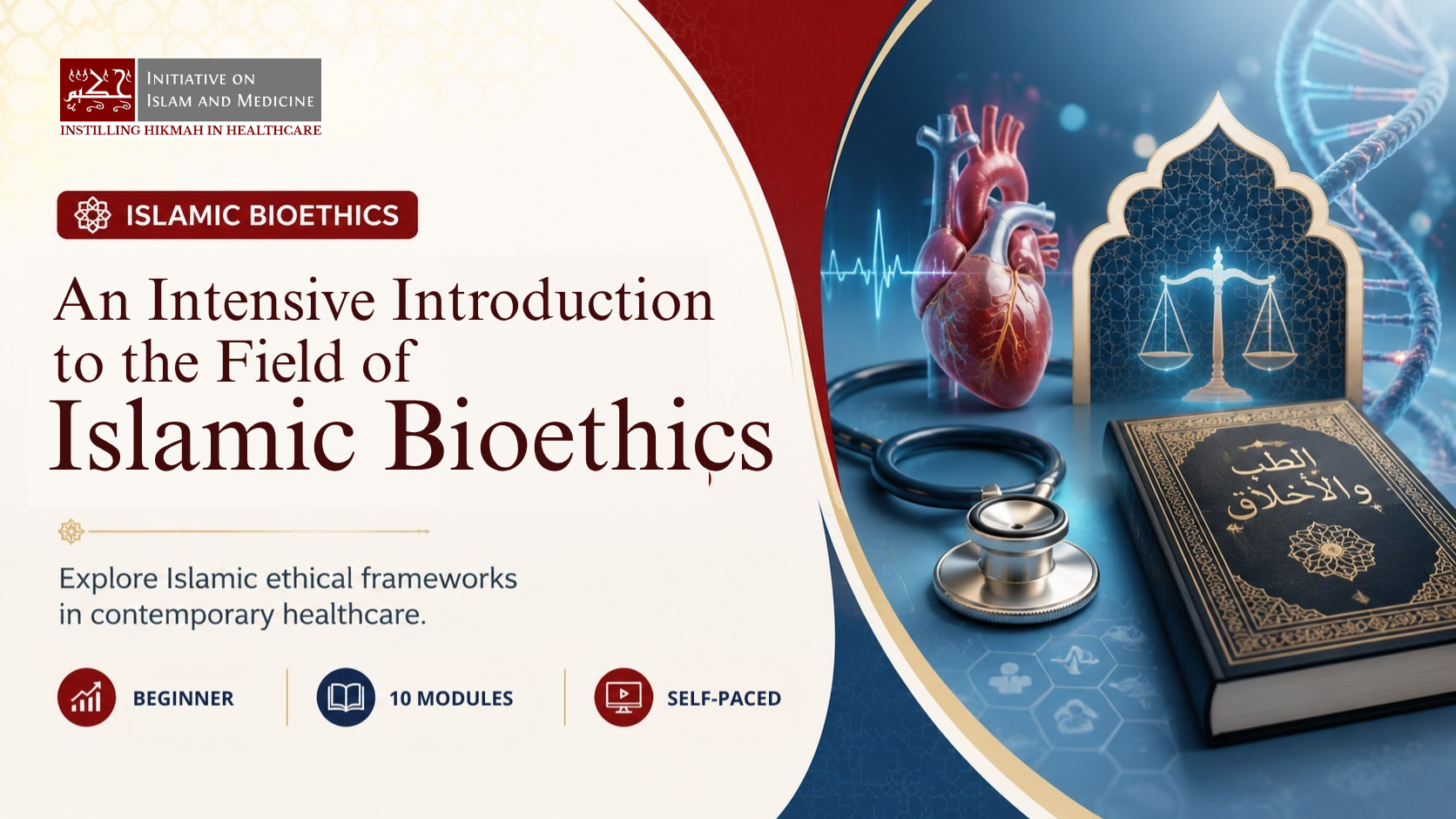
An Intensive Introduction to the Field of Islamic Bioethics

A self-paced introductory course exploring Islamic bioethics, Islamic moral reasoning, and key contemporary healthcare ethics questions, including end-of-life care, brain death, organ donation, abortion, and human reproduction.

By Initiative on Islam and Medicine logoInitiative on Islam and Medicine0.0(0 reviews)2 Students
60 Hours1 modulebeginnerEnglish
An Intensive Introduction to the Field of Islamic Bioethics

What you'll learn

By the end of this course, you'll be able to master the key skills taught in this program.

  • Describe the scope and significance of Islamic bioethics
  • Explain how Islamic ethical and legal frameworks relate to healthcare decision-making
  • Understand major Islamic bioethics topics such as brain death, end-of-life care, organ donation, abortion, and human reproduction
  • Identify key stakeholders involved in Islamic bioethical discourse

About this course

An Intensive Introduction to the Field of Islamic Bioethics introduces learners to the emerging field of Islamic bioethics and its relevance to modern healthcare, medical practice, Islamic law, and moral decision-making.

This self-paced course provides a structured overview of how Islamic ethical frameworks are applied to contemporary biomedical questions. Learners will examine the sources of Islamic moral reasoning, the relationship between Islamic law and bioethics, and the roles of key stakeholders such as clinicians, patients, scholars, families, and institutions.

The course also introduces major applied topics in Islamic bioethics, including brain death, end-of-life care, organ donation and transplantation, abortion, human reproduction, and healthcare decision-making. Through a combination of lectures, readings, and reflective learning, students will gain a foundational understanding of how Islamic values and ethical reasoning inform healthcare practice.

Course curriculum

1 module · 1 lecture

Requirements

To get the most out of this course, you should have:

  • 01Interest in Islamic ethics, healthcare, or bioethics
  • 02Basic familiarity with healthcare or Islamic studies is helpful but not required
  • 03Ability to engage with academic and reflective course material

Instructors

Meet the experts who will guide you in this course.

Aasim I. Padela profile
2 students
1 course

Aasim I. Padela

Professor · Emergency Medicine, Bioethics & Medical Humanities


Professor · Emergency Medicine, Bioethics & Medical Humanities - Founder, Board Member, Initiative on Islam & Medicine. Leading scholar in Islamic bioethics, Muslim physician identity, and medical professionalism — with extensive teaching experience at intersection of Islam and biomedicine.

Student reviews

No reviews yet

5
0%
4
0%
3
0%
2
0%
1
0%

See frequently asked questions

Frequently asked questions

Find answers to the most common questions about this course.


No. This course is designed as an introduction. Learners do not need prior formal training in Islamic bioethics, although interest in healthcare, ethics, or Islamic studies will be helpful.